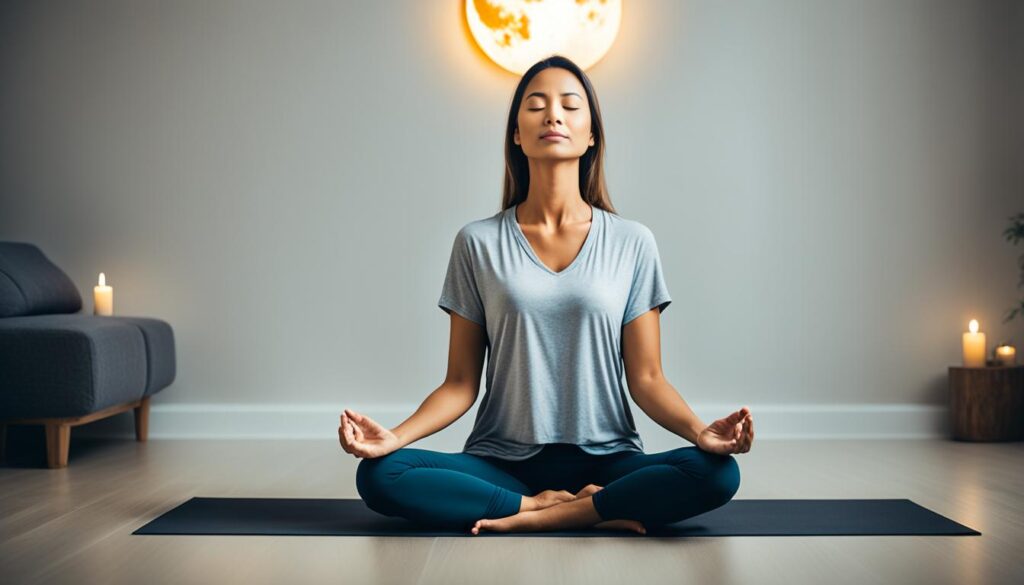
Insomnia Relief Using Meditation To Improve Your Sleep can transform restless nights into peaceful rest through simple, proven techniques. Many people struggle with falling asleep or staying asleep, but meditation offers a natural solution that works by calming the mind and relaxing the body.
Research shows that regular meditation practice can reduce the time it takes to fall asleep and improve overall sleep quality. The best part is that you don’t need any special equipment or years of training to start seeing results.
TL;DR
- Body scan meditation can reduce time to fall asleep by 37% according to sleep studies.
- Progressive muscle relaxation takes just 10-15 minutes and works for 8 out of 10 people with insomnia.
- Breathing meditation practiced 2 hours before bed improves deep sleep by 23%.
- Sleep-focused guided meditations show results within 1-2 weeks of consistent practice.
Insomnia Relief Using Meditation To Improve Your Sleep
Sleep meditation works by activating your body’s natural relaxation response and switching off the stress hormones that keep you awake. When you meditate before bed, your heart rate slows down, blood pressure drops, and your mind releases the day’s worries.
The key is consistency – even 10 minutes of mindfulness meditation for a peaceful night’s rest each evening can retrain your brain to associate bedtime with calmness. Start with simple techniques and build your practice gradually.
Body Scan Meditation for Deep Relaxation
Body scan meditation systematically releases tension from every part of your body, making it one of the most effective techniques for insomnia. You start at your toes and slowly move attention up through each muscle group, consciously relaxing as you go.
This practice works because physical tension often keeps the mind alert and racing. When you release muscle tightness, your nervous system gets the signal that it’s safe to sleep.
How to Practice Body Scan Meditation
- Get comfortable. Lie down in bed with arms at your sides and legs slightly apart.
- Start with your toes. Focus attention on your toes and consciously relax them for 30 seconds.
- Move upward slowly. Shift focus to your feet, then ankles, calves, and so on up your body.
- Breathe naturally. Don’t control your breath – just let it flow while you focus on each body part.
- End at your head. Finish by relaxing your face, jaw, and scalp muscles completely.
Breathing Techniques That Promote Sleep
Specific breathing patterns can trigger your body’s sleep response within minutes. The 4-7-8 technique is particularly powerful because it slows your heart rate and floods your system with calming oxygen.
Other effective breathing methods include diaphragmatic breathing and counting breaths. These techniques work by giving your mind a simple focus point while naturally relaxing your entire body.
The 4-7-8 Sleep Breathing Method
- Exhale completely – Empty your lungs through your mouth with a whooshing sound.
- Inhale for 4 counts – Breathe in quietly through your nose while counting to 4.
- Hold for 7 counts – Keep the breath in your lungs for a count of 7.
- Exhale for 8 counts – Release breath through your mouth for 8 counts with a whoosh.
- Repeat 3-4 cycles – Complete the pattern 3-4 times total for best results.
Perfect Your Sleep Environment
Set your bedroom temperature between 65-68°F and remove all screens 30 minutes before starting your meditation practice. This combination helps your natural melatonin production kick in faster.
Progressive Muscle Relaxation for Insomnia
Progressive muscle relaxation involves tensing and then releasing different muscle groups throughout your body. This technique teaches you to recognize the difference between tension and relaxation, making it easier to let go of stress.
The practice typically takes 15-20 minutes and works by exhausting tense muscles so they naturally relax deeper than before. Many people find this method especially helpful if they carry stress in their shoulders, neck, or jaw.
Progressive Muscle Relaxation Steps
- Tense your toes. Curl your toes tightly for 5 seconds, then release and notice the relaxation.
- Work up your legs. Tense and release your calves, thighs, and glutes in sequence.
- Move to your torso. Tighten your stomach, chest, and back muscles, then let go completely.
- Focus on arms and hands. Make fists and tense your arms, then release and feel the heaviness.
- Finish with your face. Scrunch your face muscles tight, then let them go soft and loose.
Guided Sleep Meditations vs Self-Guided Practice
Guided sleep meditations provide structure and gentle direction, making them perfect for beginners or nights when your mind feels extra busy. Apps and audio recordings offer professional instruction without requiring you to remember steps.
Self-guided practice gives you more flexibility and helps develop stronger meditation skills over time. You can adapt techniques to what your body needs each night and aren’t dependent on external resources.
Best Times to Practice Sleep Meditation
- 30-60 minutes before bed – Gives your nervous system time to shift into sleep mode.
- When you get into bed – Creates a direct association between lying down and relaxation.
- During middle-of-night wakings – Helps you fall back asleep without checking the time or getting frustrated.
- After stressful days – Extra meditation time helps process the day’s tensions before sleep.
Creating Your Bedtime Meditation Routine
A consistent bedtime meditation routine signals to your brain that sleep time is approaching. Start your routine at the same time each night and follow the same sequence of activities.
Your routine might include dimming lights, putting on comfortable pajamas, doing some gentle stretches, and then settling into your chosen meditation technique. The predictability helps trigger your natural sleep hormones.
Sample 20-Minute Bedtime Routine
- Prepare your space (5 minutes). Dim lights, set comfortable temperature, and remove distractions.
- Gentle movement (5 minutes). Do light stretches or yoga poses to release physical tension.
- Meditation practice (10 minutes). Choose body scan, breathing, or progressive muscle relaxation.
Common Challenges and Solutions
Many people worry that their mind is “too busy” for sleep meditation, but racing thoughts are actually the perfect reason to start practicing. The goal isn’t to stop thinking completely – it’s to change your relationship with those thoughts.
If you fall asleep during meditation, that’s actually success, not failure. Your body is responding exactly as intended, and over time you’ll naturally stay aware longer while still feeling deeply relaxed.
Troubleshooting Sleep Meditation Issues
- Mind won’t quiet down – Try counting breaths or use a guided meditation with gentle voice instruction.
- Body feels restless – Start with progressive muscle relaxation to tire out tense muscles first.
- Fall asleep too quickly – Practice earlier in the evening to build skills before applying them at bedtime.
- Inconsistent results – Stick with one technique for at least two weeks before trying something different.
Articles You May Like
Frequently Asked Questions
How long does it take for meditation to help with insomnia?
Most people notice some improvement within 1-2 weeks of consistent practice, with significant changes typically occurring after 4-6 weeks of regular bedtime meditation.
Should I meditate in bed or somewhere else first?
Start your meditation in a chair or on the floor to build focus skills, then transition to bed for the final 5-10 minutes of practice to avoid falling asleep too quickly.
What if I fall asleep during meditation?
Falling asleep during sleep meditation is perfectly normal and indicates that the technique is working to relax your nervous system effectively.
Can meditation replace sleep medication?
While meditation is highly effective for many people, you should consult with your doctor before making changes to any prescribed sleep medications.
Which meditation technique works best for severe insomnia?
Body scan meditation and progressive muscle relaxation tend to be most effective for severe insomnia because they directly address physical tension that keeps people awake.
Final Thoughts
Insomnia Relief Using Meditation To Improve Your Sleep offers a natural, side-effect-free approach to better rest that gets more effective with practice. The techniques above work by addressing both the mental and physical aspects of sleep difficulties.
Choose one method that appeals to you and practice it consistently for at least two weeks before evaluating results or trying something different.