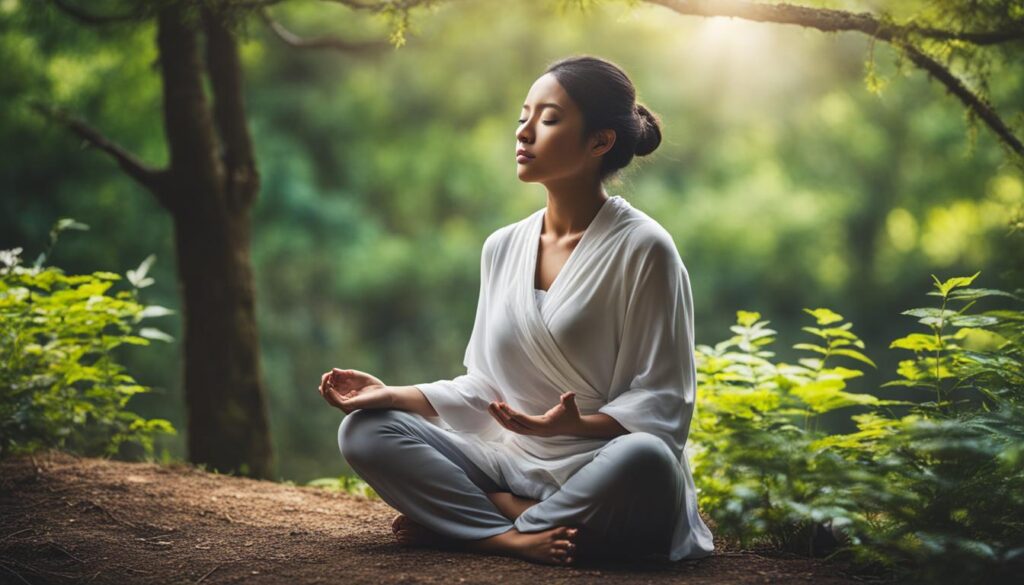
Breath Awareness Meditation is a simple yet powerful practice that focuses your attention on the natural rhythm of your breathing. This foundational meditation technique helps you develop present-moment awareness while reducing stress and anxiety in your daily life.
Many people struggle to quiet their busy minds, but breath awareness meditation offers an accessible starting point for anyone wanting to experience inner calm. By simply observing your breath without trying to change it, you create space between yourself and your thoughts.
TL;DR
- Practice for just 5-10 minutes daily to experience measurable stress reduction within 2-3 weeks.
- Focus on your natural breathing rhythm without controlling it – this activates your parasympathetic nervous system.
- When your mind wanders, gently return attention to your breath without judgment or frustration.
- Studies show 8 weeks of regular practice improves attention span by up to 14% and reduces cortisol levels by 23%.
Breath Awareness Meditation: Your Gateway to Mindfulness
Breath awareness meditation serves as the foundation for most mindfulness practices because your breath is always available as an anchor for attention. Unlike other meditation objects that require visualization or complex techniques, your breath provides a simple and reliable focal point.
This practice works by training your attention to rest on one specific sensation – the feeling of air moving in and out of your body. As you develop this skill, you naturally become more present and less caught up in worrying thoughts about the future or regrets about the past.
Essential Steps for Practicing Breath Awareness
Getting started with breath awareness meditation requires no special equipment or training. You can practice this technique anywhere, though a quiet space helps when you’re beginning.
- Find your position. Sit comfortably with your spine straight or lie down if sitting is uncomfortable. Close your eyes or soften your gaze downward.
- Locate your breath. Notice where you feel your breathing most clearly – this might be at your nostrils, chest, or belly area.
- Observe without changing. Watch your natural breathing rhythm without trying to make it deeper or slower than it naturally wants to be.
- Return when you wander. When thoughts pull your attention away, gently guide your focus back to your breath without criticizing yourself.
- End gradually. After your chosen time period, slowly open your eyes and take a moment before moving into your day.
The key is consistency rather than duration. Starting your meditation journey with just five minutes daily builds a sustainable habit more effectively than attempting longer sessions sporadically.
Common Breath Awareness Techniques
Several variations of breath awareness meditation can help you maintain interest and find what works best for your mind:
- Counting breaths – Count each exhale from 1 to 10, then start over to give your mind a gentle task.
- Following the full cycle – Track each complete in-breath and out-breath from beginning to end.
- Noting the pauses – Pay attention to the natural spaces between inhaling and exhaling.
- Breath sensations – Focus on physical feelings like temperature, texture, or movement of air.
Science-Backed Benefits for Mind and Body
Research consistently shows that breath awareness meditation creates measurable changes in brain structure and function. NIH studies demonstrate that regular practice strengthens areas responsible for attention and emotional regulation while reducing activity in regions associated with stress and anxiety.
Physical benefits include lowered blood pressure, improved heart rate variability, and better immune system function. The practice activates your body’s relaxation response, which counteracts the harmful effects of chronic stress on your health.
Mental and Emotional Improvements
Breath awareness meditation particularly excels at improving focus and concentration. Studies show practitioners develop better sustained attention and less mind-wandering during daily activities.
The emotional benefits are equally significant. Regular practice helps you observe difficult emotions without being overwhelmed by them, leading to better emotional regulation and resilience during challenging situations.
Start Small for Success
Begin with 3-5 minutes daily rather than attempting longer sessions. Building consistency matters more than duration when establishing your practice.
Building Your Daily Practice
Creating a sustainable breath awareness meditation routine requires finding the right time and place that works with your lifestyle. Many people find morning sessions help set a calm tone for their entire day.
Establishing a meditation routine becomes easier when you link your practice to an existing habit like drinking morning coffee or preparing for bed. This connection helps your new meditation habit stick more naturally.
Creating Your Meditation Environment
While you can practice breath awareness anywhere, having a designated space supports your commitment to regular meditation. Your space doesn’t need to be elaborate – even a corner of a room with a comfortable cushion works perfectly.
Creating your sacred meditation space at home helps signal to your mind that it’s time to shift into a more peaceful state. Consistent environmental cues strengthen your meditation habit over time.
Working with Common Challenges
Every meditator encounters obstacles, and breath awareness practice is no exception. The most common challenge is mind-wandering, which is completely normal and expected.
When you notice your attention has drifted to thoughts, plans, or concerns, simply acknowledge this without judgment and gently return to your breath. This returning process is actually the meditation – not maintaining perfect focus.
Dealing with Physical Discomfort
Physical discomfort during meditation can distract from breath awareness. If you experience pain or restlessness, try adjusting your position or switching between sitting and lying down.
Dealing with restlessness in meditation becomes easier as you develop patience with temporary discomfort and learn to distinguish between genuine physical needs and mental resistance to sitting still.
Integrating Breath Awareness into Daily Life
The real power of breath awareness meditation emerges when you bring this mindful attention to everyday activities. You can use brief moments of breath awareness throughout your day to reset your nervous system and return to the present moment.
Try taking three conscious breaths before important meetings, while waiting in line, or during transitions between activities. These mini-sessions help maintain the calm awareness you develop during formal meditation periods.
Mindful living naturally develops as you become more skilled at using your breath as an anchor for present-moment awareness in all situations, not just during meditation.
Articles You May Like
Frequently Asked Questions
How long should I practice breath awareness meditation as a beginner?
Start with 5-10 minutes daily. This duration is long enough to experience benefits while being manageable enough to maintain consistency.
Is it normal for my mind to wander constantly during breath meditation?
Yes, mind-wandering is completely normal and expected. The practice involves noticing when your mind wanders and gently returning attention to your breath without judgment.
Should I try to control my breathing during this meditation?
No, simply observe your natural breathing rhythm without trying to change its depth, speed, or pattern. Let your body breathe naturally while you watch.
What’s the best time of day to practice breath awareness meditation?
The best time is when you can practice consistently. Many people prefer mornings for setting a calm tone, while others find evening sessions help them unwind.
Final Thoughts
Breath Awareness Meditation offers a simple yet profound path to greater mindfulness and inner peace. This accessible practice requires no special equipment or complex techniques – just your willingness to pay attention to something you do naturally all day long.
Start with a few minutes today and discover how this ancient practice can transform your relationship with stress, anxiety, and the present moment. Your breath is always available as a doorway to calm awareness, no matter what challenges life brings your way.