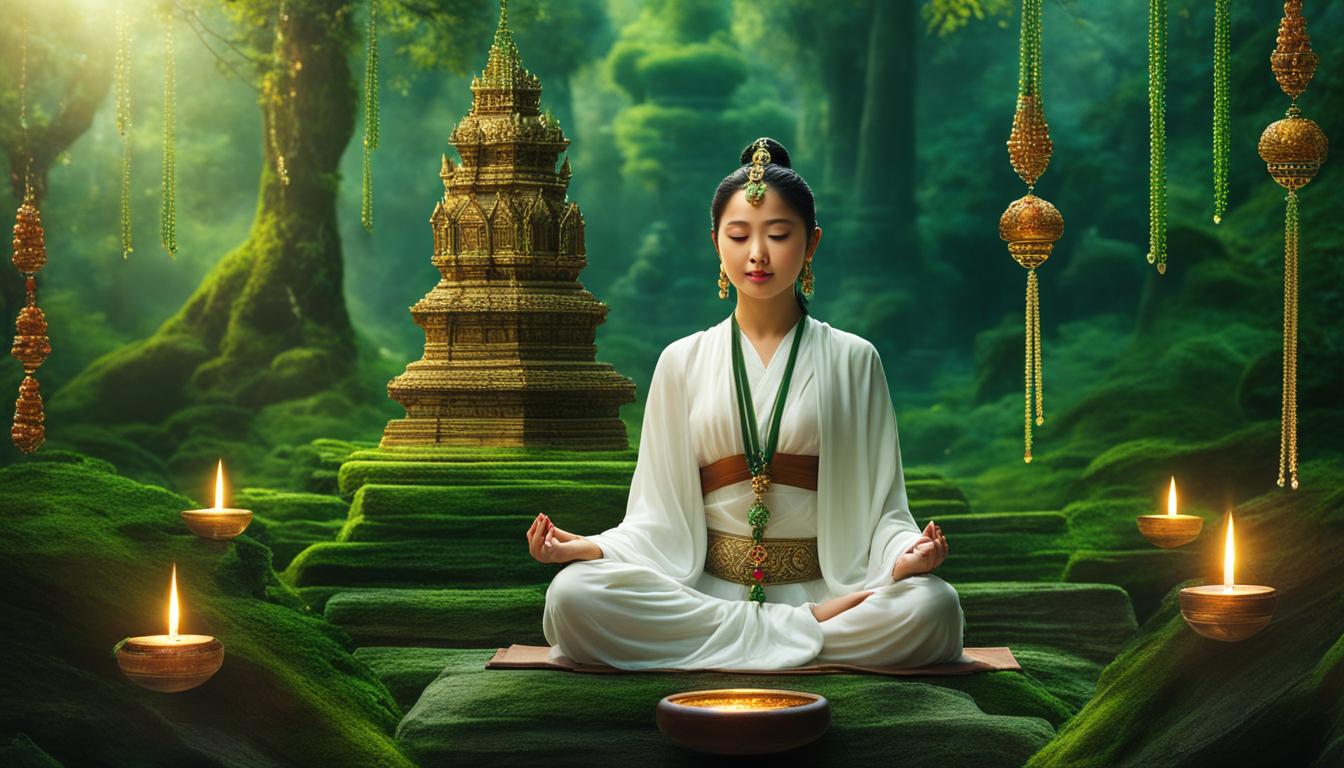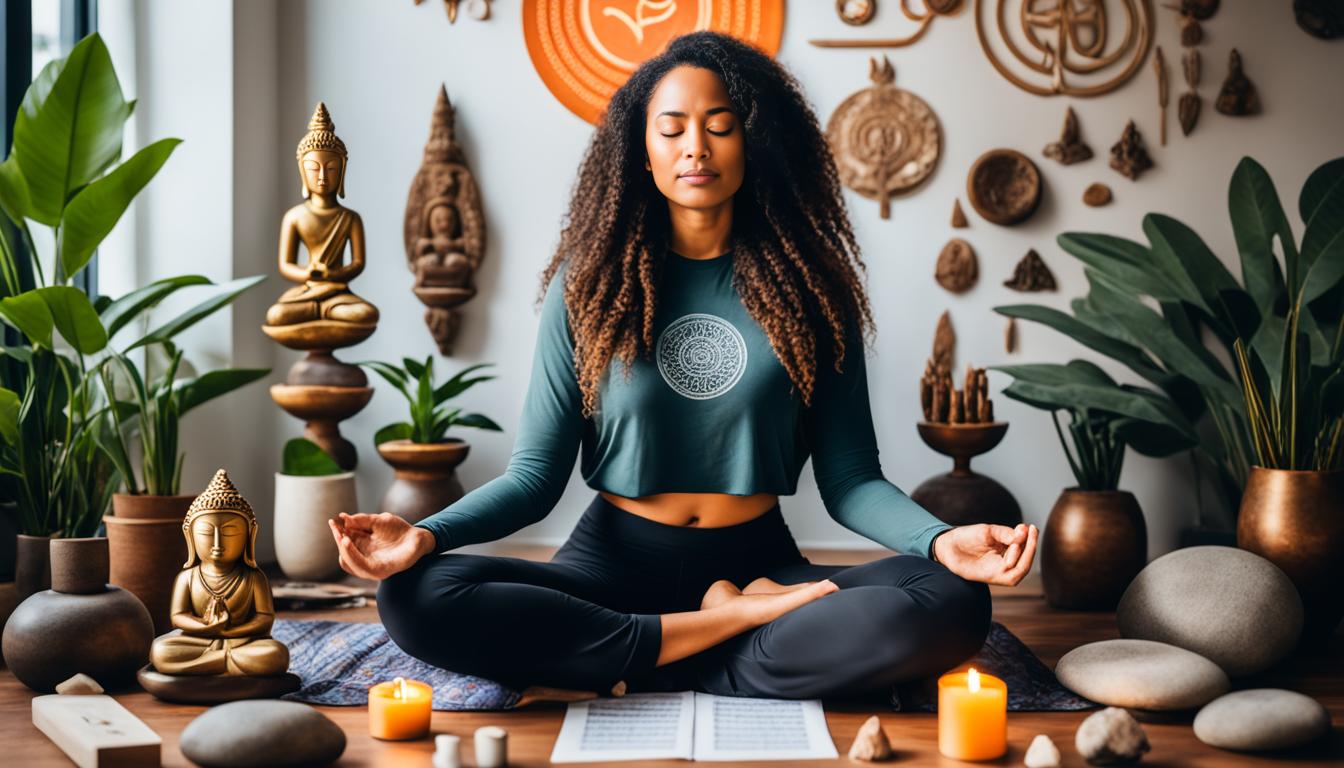
Choosing The Perfect Mantra For Your Meditation Practice can transform your daily routine and deepen your connection to inner peace. Finding the right mantra is a personal journey that requires understanding your intentions and trusting your intuition. The perfect mantra will resonate with your goals and feel natural when you repeat it during meditation sessions.
Whether you’re new to meditation or looking to enhance your existing practice, selecting a meaningful mantra creates a foundation for focused awareness. The right choice can help calm your mind, reduce stress, and open pathways to spiritual growth.
TL;DR
- Start with simple one-word mantras like “peace” or “calm” if you’re a beginner – they’re easier to remember and maintain focus.
- Sanskrit mantras like “Om” carry 3,000+ years of spiritual tradition and proven vibrational power.
- Practice your chosen mantra for at least 21 days before switching – consistency builds deeper connection and effectiveness.
- Personal affirmations work best when they’re 3-7 words long and reflect your current life goals or healing needs.
Choosing The Perfect Mantra For Your Meditation Practice
The foundation of effective mantra meditation lies in selecting words or phrases that align with your personal intentions. Your mantra becomes a sacred tool that guides your mind away from distractions and toward focused awareness. Mantra meditation works by creating a mental anchor that keeps you present during your practice.
Start by defining what you hope to achieve through meditation. Whether you seek stress relief, spiritual growth, or emotional healing, your intention shapes the type of mantra that will serve you best.
Traditional Sanskrit Mantras
Sanskrit mantras carry thousands of years of spiritual energy and have been tested by countless practitioners. These ancient sounds create specific vibrations that affect your mind and body in profound ways.
- Om – The universal sound representing creation and unity with the cosmos.
- So Hum – Meaning “I am that” and connecting you to universal consciousness.
- Om Mani Padme Hum – A compassion mantra that purifies negative emotions.
- Om Gam Ganapataye Namaha – For removing obstacles and new beginnings.
Personal Affirmations as Mantras
Creating your own mantra allows you to address specific life situations and goals. Personal mantras should be positive, present-tense statements that reflect your desired state of being.
- I am at peace – For anxiety and stress relief.
- I trust the process – During times of uncertainty or change.
- Love flows through me – For healing relationships and self-compassion.
- I am enough – Building self-worth and confidence.
Understanding Mantra Vibrations and Energy
The power of mantras extends beyond their literal meaning to encompass the vibrational energy they create. When you repeat a mantra, the sound waves affect your nervous system and brainwave patterns. This scientific reality explains why mantra meditation benefits include reduced stress hormones and increased focus.
The rhythm and resonance of your chosen mantra matter as much as the words themselves. Sanskrit mantras were specifically designed to create healing frequencies when pronounced correctly.
How Sound Affects Your Meditation
Chanting mantras aloud creates external vibrations that you can feel in your chest and throat. Silent repetition works internally, creating mental focus without physical sensation. Both methods offer unique benefits and you can experiment to find what works best for your practice.
The key is consistency in how you use your mantra rather than perfect pronunciation. Your intention and regular practice create the transformative effects you seek.
Start Simple for Better Results
Choose a one or two-word mantra when beginning your practice. Complex phrases can become distracting when you’re learning to focus your mind.
Testing and Committing to Your Mantra
The process of finding your perfect mantra involves experimentation and patience. Spend at least a week with each potential mantra before making your final decision. This testing period allows you to experience how different sounds and meanings affect your meditation quality.
Pay attention to how each mantra feels in your body and mind. The right choice will create a sense of calm and focus rather than force or strain. Effective mantra techniques develop naturally when you’ve chosen words that truly resonate with you.
Signs You’ve Found the Right Mantra
Several indicators suggest you’ve discovered your ideal mantra for regular practice:
- Natural flow. The words come easily without mental effort or strain.
- Emotional resonance. You feel a positive shift in mood when repeating it.
- Physical relaxation. Your body naturally releases tension during repetition.
- Mental clarity. Thoughts become calmer and more organized.
Building Consistency
Once you’ve selected your mantra, commit to using it for at least 21 days. This commitment period allows the practice to take root and become a natural part of your routine. Switching mantras too frequently prevents you from experiencing their deeper benefits.
Track your meditation sessions and note any changes in your stress levels, sleep quality, or overall well-being. These observations help you understand how your chosen mantra affects your daily life beyond formal meditation periods.
Integrating Your Mantra into Daily Life
Your perfect mantra becomes most powerful when you extend its use beyond formal sitting meditation. Throughout the day, you can silently repeat your mantra during stressful moments, while walking, or before important meetings. This integration helps maintain the calm and focused state you cultivate during meditation.
The beauty of mantra practice lies in its portability and accessibility. Unlike other meditation techniques that require specific conditions, mantra repetition can happen anywhere and anytime you need centering. Understanding the tradition behind your practice can deepen your connection and commitment.
Creating Sacred Space
While mantras work anywhere, establishing a dedicated meditation space enhances your practice. This doesn’t require a large area – even a corner of a room with a cushion or chair works well. The key is consistency in where you practice formal sessions.
Consider adding elements that support your mantra practice such as:
- Mala beads – Traditional counting beads for longer mantra sessions.
- Soft lighting – Candles or dim lamps create peaceful atmosphere.
- Comfortable seating – A cushion or chair that supports good posture.
- Minimal distractions – Turn off phones and close doors during practice time.
Articles You May Like
Frequently Asked Questions
How long should I repeat my mantra during meditation?
Begin with 5-10 minutes daily and gradually increase to 20-30 minutes as your practice develops. Quality matters more than duration when starting out.
Can I change my mantra if it stops working?
Yes, but give each mantra at least 21 days of consistent practice before switching. Sometimes resistance indicates you’re working through important inner blocks.
Should I chant my mantra aloud or silently?
Both methods work effectively – experiment to find your preference. Audible chanting can improve focus for beginners, while silent repetition works well in public spaces.
Do I need to understand Sanskrit to use traditional mantras?
Understanding the meaning helps deepen your practice, but it’s not required. The vibrational qualities of Sanskrit mantras work regardless of your comprehension level.
How do I know if my mantra is working?
Look for signs like increased calmness, better stress management, improved focus, and a growing sense of inner peace in your daily life.
Final Thoughts
Choosing The Perfect Mantra For Your Meditation Practice is a deeply personal journey that unfolds over time. Trust your intuition while remaining open to experimentation and guidance from experienced teachers. The right mantra will feel like a natural extension of your inner voice and support your meditation goals.
Remember that consistency trumps perfection in mantra meditation. Start with simple words or phrases that resonate with your current needs, and allow your practice to evolve naturally as you grow in experience and understanding.