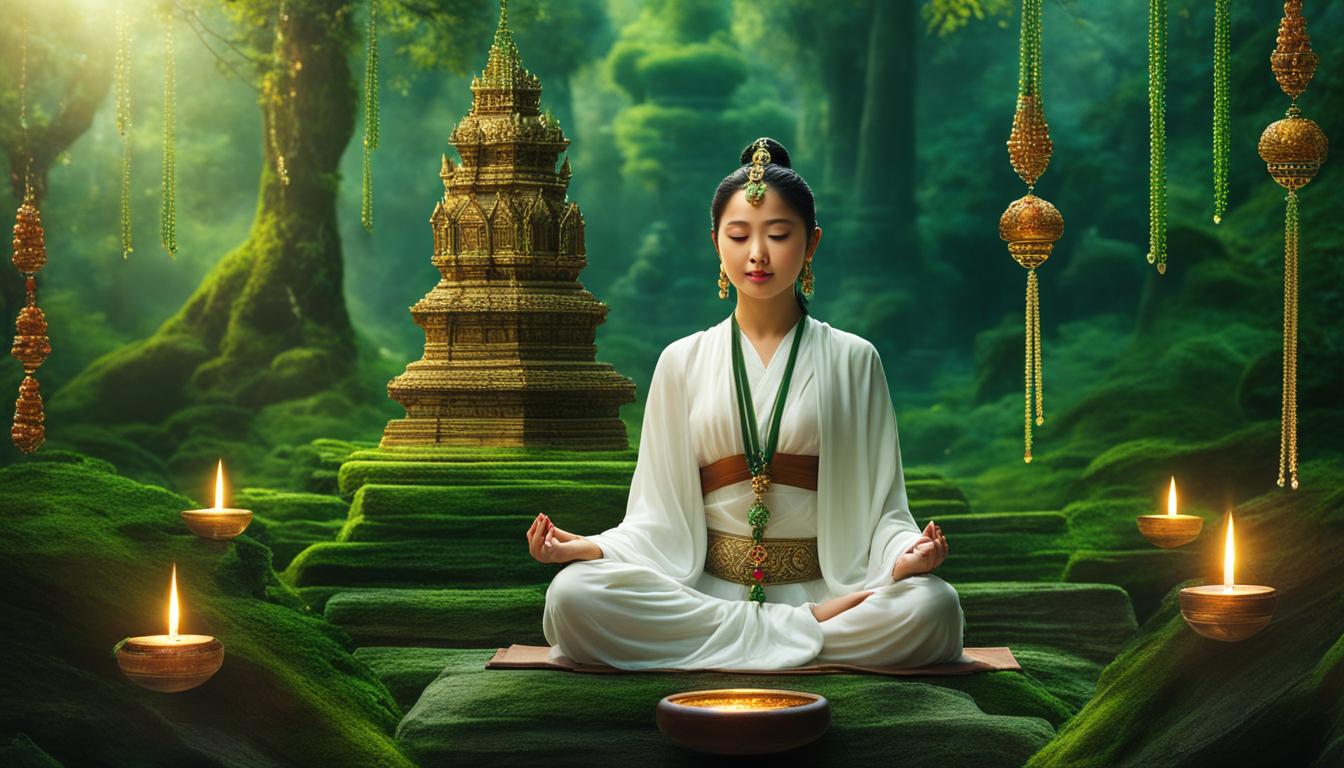
Mantra Meditation The Sacred Practice Of Chanting offers a powerful pathway to inner peace through the repetition of sacred sounds and words. This ancient practice combines focused attention with vibrational energy to create profound states of calm and spiritual connection.
Whether you’re new to meditation or looking to deepen your practice, chanting mantras can transform your daily routine into a sacred ritual. The combination of breath, sound, and intention creates a unique meditation experience that both soothes the mind and energizes the spirit.
TL;DR
- Start with simple mantras like “Om” or “So Hum” – repeat for 5-10 minutes daily to build your practice.
- Chant aloud for the first 108 repetitions, then continue silently to deepen your inner focus.
- Practice at the same time each morning to establish a consistent routine that becomes automatic.
- Use mala beads with 108 beads to count repetitions and maintain focus during longer sessions.
Mantra Meditation The Sacred Practice Of Chanting
Mantra meditation involves the repetitive chanting or mental recitation of specific sounds, words, or phrases. These sacred syllables carry vibrational qualities that help focus the mind and connect practitioners to deeper states of awareness.
The word “mantra” comes from Sanskrit, meaning “mind tool” or “instrument of thought.” Each mantra serves as a vehicle to transport consciousness from everyday thinking into meditative states of peace and clarity.
The Science Behind Sacred Sound
Research shows that repetitive chanting activates the parasympathetic nervous system, which triggers the body’s relaxation response. The vibrations created by mantras also stimulate the vagus nerve, promoting feelings of calm and well-being.
Sound frequencies from chanting create measurable changes in brain waves, shifting from beta waves associated with active thinking to alpha and theta waves linked to meditation and deep relaxation. This physiological shift explains why practitioners often report profound peace during mantra sessions.
Getting Started with Basic Mantras
Begin your practice with simple, universal mantras that don’t require specific religious beliefs or cultural background. These foundational sounds work for practitioners of any tradition or spiritual path.
Start with short sessions of 5-10 minutes and gradually extend your practice as concentration improves. Consistency matters more than duration – daily practice for shorter periods builds stronger habits than occasional long sessions.
Universal Mantras for Beginners
- Om (AUM) – The primordial sound representing universal consciousness and creation.
- So Hum – Sanskrit for “I am that,” connecting individual self to universal being.
- Om Namah Shivaya – Honoring the divine consciousness within all beings.
- Gate Gate Paragate – Buddhist mantra meaning “gone beyond” for liberation.
- Om Mani Padme Hum – Tibetan compassion mantra invoking loving-kindness.
Choose one mantra and work with it for at least a week before exploring others. This consistency allows you to experience the full depth and power of each sacred sound.
Proper Chanting Technique
Sit comfortably with your spine straight and shoulders relaxed. Begin by chanting aloud, allowing the vibrations to resonate through your chest and head.
Breathe naturally and let the mantra flow with your breath rhythm. After several minutes of audible chanting, transition to silent mental repetition while maintaining the same internal rhythm.
- Establish your posture. Find a stable, comfortable position that you can maintain throughout the session.
- Begin with audible chanting. Let the sound vibrate through your body for the first portion of practice.
- Transition to silent repetition. Continue the mantra mentally while maintaining focus on the internal sound.
- Return to audible chanting. End your session with a few spoken repetitions to ground the practice.
Traditional Tools and Techniques
Mala beads serve as the primary tool for counting mantra repetitions. Traditional malas contain 108 beads, representing the sacred number found throughout Hindu and Buddhist traditions.
Hold the mala in your right hand, using your thumb to move from bead to bead with each mantra repetition. This tactile element helps maintain focus and provides a physical anchor for the mind.
The Significance of 108 Repetitions
The number 108 holds deep spiritual significance across many traditions. It represents the distance between Earth and Sun as 108 times the Sun’s diameter, connecting practitioners to cosmic rhythms.
Completing 108 repetitions typically takes 10-15 minutes, making it an ideal length for daily practice. This traditional count also helps establish a consistent practice rhythm that becomes deeply ingrained over time.
Create Your Sacred Practice Time
Choose the same time each day for mantra meditation, ideally early morning when the mind is naturally quieter. Set up your space the night before with your mala and any other sacred objects to eliminate morning distractions.
Advanced Practices and Variations
As your practice develops, you can explore longer mantras and more complex techniques. Some practitioners work with planetary mantras, deity mantras, or personal mantras received from teachers.
Advanced techniques include japa meditation, where the mantra becomes a continuous inner sound throughout daily activities. This constant repetition transforms the mantra from a practice into a living presence in consciousness.
Integrating Mantra with Daily Life
Carry your practice beyond formal sitting sessions by repeating your chosen mantra during routine activities. Walking meditation combined with mantra repetition creates a moving meditation that fits easily into daily schedules.
Use mantra repetition during stressful moments as an instant centering technique. The familiar sound pattern quickly activates the relaxation response and returns your mind to a peaceful state.
Common Challenges and Solutions
New practitioners often struggle with mind wandering or feeling self-conscious about chanting aloud. These challenges are completely normal and part of the learning process.
When thoughts arise during practice, simply notice them without judgment and return attention to the mantra. The sacred sound serves as an anchor that naturally draws consciousness back from distraction.
Overcoming Initial Resistance
- Start quietly – Begin with whispered chanting if loud repetition feels uncomfortable.
- Use familiar sounds – Work with simple mantras like “Om” before exploring complex Sanskrit phrases.
- Practice regularly – Daily repetition builds familiarity and comfort with the practice.
- Join others – Group chanting creates supportive energy for new practitioners.
Remember that mantra meditation techniques and tips can vary significantly between traditions and teachers. Find approaches that resonate with your personal style and spiritual inclinations while maintaining respect for traditional methods.
Building a Sustainable Practice
Consistency creates the foundation for transformative mantra meditation. Start with realistic goals like 5-10 minutes daily rather than ambitious sessions you can’t maintain.
Track your practice in a simple journal, noting the mantra used, duration, and any insights or experiences. This record helps identify patterns and progress while maintaining motivation during challenging periods.
Creating Sacred Space
Designate a specific area for mantra practice, even if it’s just a corner of a room. Having a consistent physical space helps signal to your mind that it’s time for meditation.
Include meaningful objects like candles, images, or stones that support your spiritual connection. The process of choosing the right mantra for your meditation becomes easier when practiced in a space that feels sacred and supportive.
Consider the profound mantra meditation benefits for body and mind as motivation during times when practice feels difficult. The cumulative effects of regular chanting create lasting positive changes in both mental and physical well-being.
Articles You May Like
Frequently Asked Questions
How long should I chant each mantra during meditation?
Begin with 5-10 minutes of continuous repetition, gradually increasing to 20-30 minutes as your concentration develops. Quality of focus matters more than duration.
Can I practice mantra meditation without understanding Sanskrit?
Yes, the vibrational quality of mantras works regardless of intellectual understanding. Focus on the sound and feeling rather than translation meanings.
Should I chant mantras aloud or silently?
Start with audible chanting for the first few minutes, then transition to silent mental repetition. Both methods offer unique benefits for different aspects of practice.
How do I know if my mantra practice is working?
Look for increased calm, better stress management, and deeper sleep quality. The effects develop gradually through consistent daily practice over weeks and months.
Can I change mantras or should I stick with one?
Work with one mantra for at least several weeks to experience its full depth. You can explore different mantras over time, but consistency with one builds stronger concentration.
Final Thoughts
Mantra Meditation The Sacred Practice Of Chanting offers a direct path to inner peace through the power of sacred sound. This ancient technique provides both beginners and experienced practitioners with a reliable method for accessing deeper states of consciousness.
Start with simple mantras and consistent daily practice to build your foundation. The transformative power of chanting reveals itself through regular engagement with these sacred sounds.