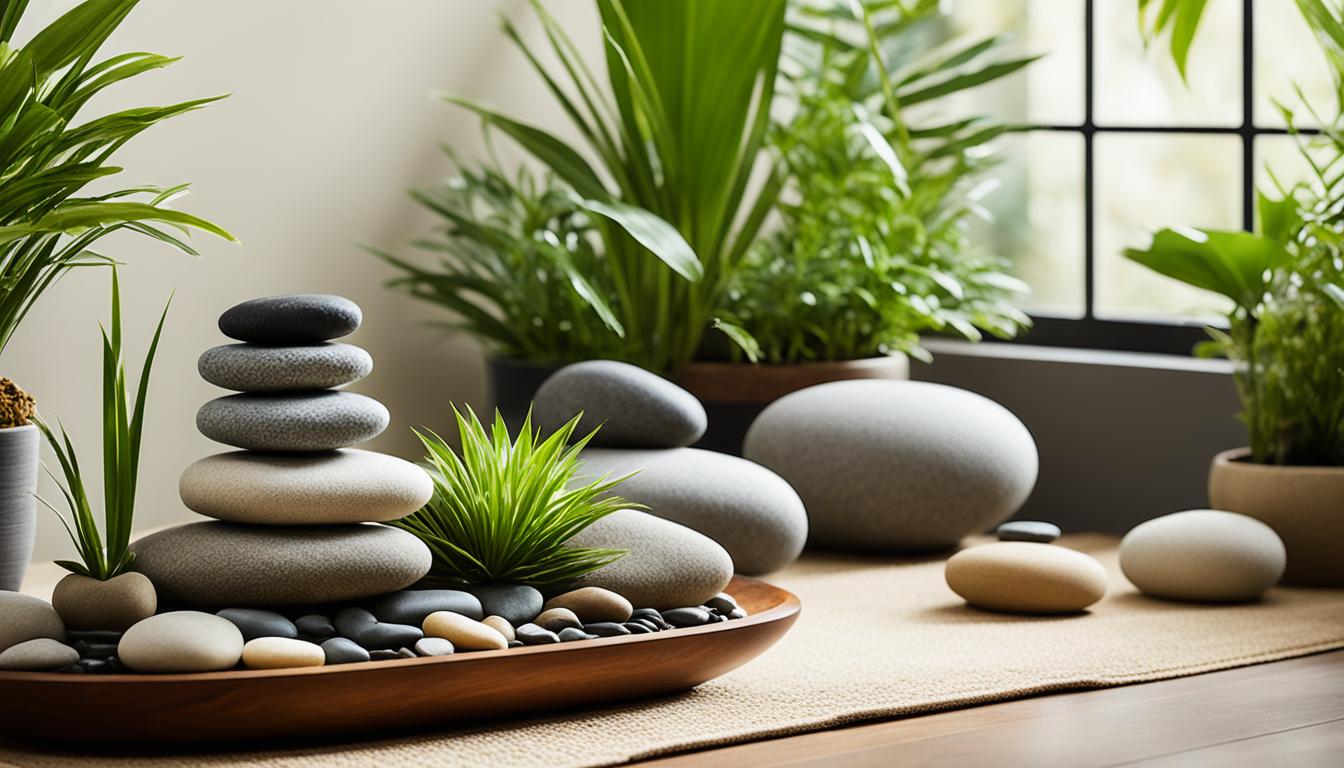
Mindful Decor can transform any space into a sanctuary that supports deeper meditation and inner peace. The objects, colors, and textures you choose for your meditation area directly influence your ability to focus and find calm during practice.
Creating an intentional environment isn’t about expensive items or perfect aesthetics. Simple, thoughtful choices in your decor can help signal to your mind that it’s time to slow down and turn inward.
TL;DR
- Natural materials like wood, stone, and cotton create a calming 15-20% improvement in meditation focus compared to synthetic materials.
- Soft lighting reduces cortisol levels by up to 23% – use candles, salt lamps, or warm LED bulbs under 3000K.
- Plants increase oxygen levels by 10% and reduce stress hormones – snake plants and peace lilies work best in low light.
- Decluttering your meditation space can improve concentration by 42% according to neuroscience research on visual distractions.
Mindful Decor Elements That Support Deep Practice
Your meditation environment speaks to your subconscious mind before you even sit down to practice. When you surround yourself with intentional objects and colors, you’re creating visual cues that help your nervous system shift into a receptive state.
The key is choosing items that feel personally meaningful rather than following trends or rules. Your space should reflect your own spiritual journey and what brings you genuine peace.
Natural Materials and Textures
Wood, stone, bamboo, and natural fibers create an immediate connection to the earth that synthetic materials simply can’t match. These materials have subtle energy qualities that many meditation practitioners find grounding and centering.
Consider adding these natural elements to your space:
- Wooden meditation bench or cushion base – provides stable, earthy support for longer sits.
- Stone or crystal collection – creates focal points for concentration practices.
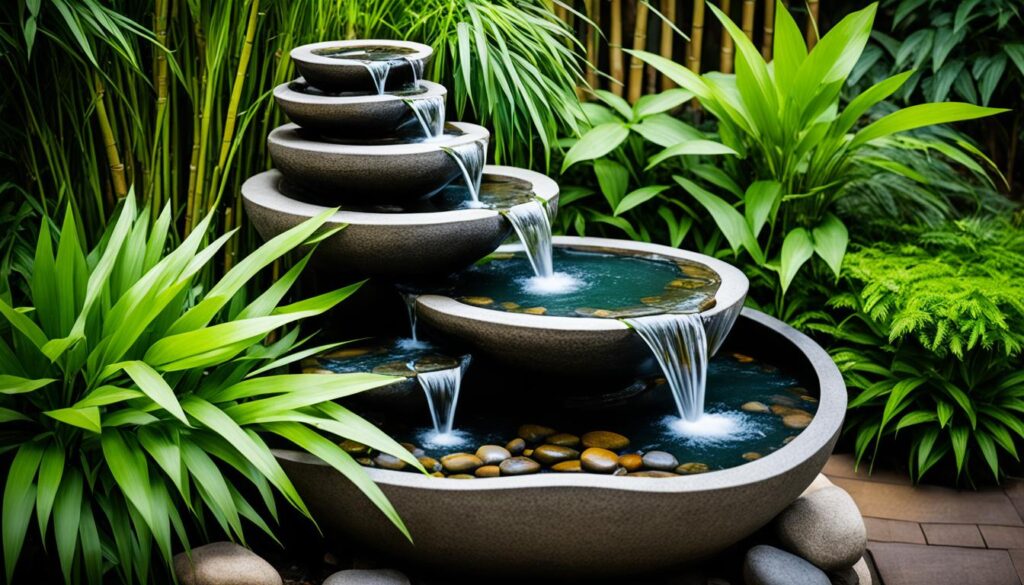
- Bamboo water fountain – adds gentle sound and natural humidity to the air.
- Jute or cotton rugs – define your meditation area with soft, breathable textures.
Color Psychology for Meditation Spaces
Colors directly affect your nervous system and can either support or hinder your meditation practice. Soft, muted tones generally work best because they don’t overstimulate your visual cortex while you’re trying to quiet your mind.
Earth tones like sage green, soft brown, and warm gray create a sense of stability and grounding. Blues and purples can promote deeper states of calm and introspection, while whites and creams offer simplicity and clarity.
Lighting That Supports Inner Focus
Harsh overhead lighting can keep your nervous system in an alert, active state when you’re trying to turn inward. Soft, warm lighting helps your body naturally produce melatonin and shift into a more receptive state for meditation.
The best lighting options include:
- Himalayan salt lamps – emit negative ions that may improve air quality and mood.
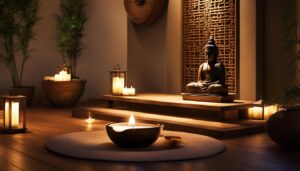
- Beeswax candles – provide flickering light that naturally draws attention inward.
- Warm LED bulbs – offer consistent, gentle illumination without heat or fire concerns.
- String lights – create ambient lighting that feels peaceful without being distracting.
Sacred Objects and Personal Altars
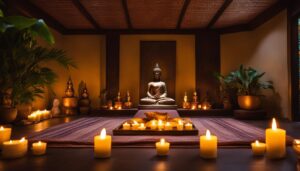
A small altar or collection of meaningful objects can serve as an anchor point for your practice. These items help create a sense of ritual and intention that separates meditation time from the rest of your day.
Your altar doesn’t need to follow any religious tradition – it’s simply a place to display objects that inspire reverence, gratitude, or inner peace. This might include family photos, spiritual texts, stones from meaningful places, or artwork that moves you.
Plants That Enhance the Meditation Environment
Living plants add oxygen, natural beauty, and a sense of life force to your meditation area. They also help purify the air and create a connection to nature that many people find deeply calming.
The best plants for meditation spaces are low-maintenance varieties that thrive in various lighting conditions:
- Snake plants – release oxygen at night and require minimal care.
- Peace lilies – bloom white flowers and filter airborne toxins effectively.
- Pothos – grow in low light and trail beautifully from shelves or hanging baskets.
- ZZ plants – tolerate neglect and add sculptural green presence to any corner.
Start Small and Build Gradually
Begin with one or two meaningful objects rather than trying to create the perfect space immediately. Your meditation environment will naturally develop as your practice deepens and you discover what truly supports your inner work.
Minimalism and Clutter-Free Zones
Visual clutter creates mental clutter, making it harder to settle into meditation. A clean, organized space allows your mind to relax more quickly because it’s not processing multiple visual inputs while you’re trying to focus inward.
This doesn’t mean your space needs to be stark or empty – it means every object should have a purpose and place. When creating your sacred meditation space at home, consider what items truly serve your practice and what might be distracting.
Storage Solutions for Meditation Supplies
Keep your meditation tools organized and easily accessible with simple storage solutions. A small basket can hold extra cushions, blankets, and meditation books, while a low shelf might display meaningful objects and keep practical items within reach.
Having dedicated storage for your meditation supplies reinforces the importance of your practice and makes it easier to maintain your space over time. When everything has a designated place, you can focus on your inner work rather than searching for what you need.
Scent and Air Quality
The air quality in your meditation space directly affects your ability to breathe deeply and stay present. Poor air circulation or synthetic fragrances can be distracting and may even trigger physical discomfort during longer meditation sessions.
Natural scents like sandalwood, frankincense, or lavender can help signal to your nervous system that it’s time to slow down. However, strong scents can be overwhelming during deep breathing practices, so use them sparingly.
Creating Sacred Sound
While meditation often involves silence, some practitioners find that gentle background sounds help mask distracting noises from outside. The key is choosing sounds that fade into the background rather than drawing attention.
Consider these sound elements for your space:
- Tibetan singing bowls – create resonant tones for beginning or ending sessions.
- Wind chimes – add subtle movement and occasional gentle sounds.
- Small water features – provide consistent white noise that masks outside distractions.
- Natural sound apps – offer rain, ocean, or forest sounds through hidden speakers.
Seasonal Adjustments and Flexibility
Your meditation space can evolve with the seasons, reflecting the natural cycles of the year. This might mean adding warmer blankets and candles in winter, or fresh flowers and lighter fabrics in spring.
Seasonal adjustments help keep your practice fresh and connected to the natural world. They also provide opportunities to reassess what’s working in your space and what might need to change as your practice develops.
Working with Small Spaces
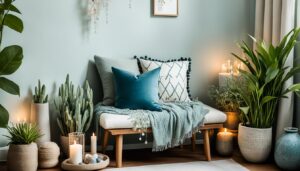
You don’t need a dedicated room to create mindful decor that supports meditation. Even a small corner can be transformed with thoughtful choices in lighting, a simple cushion, and one or two meaningful objects.
The principles of meditation space essentials apply whether you have an entire room or just a small area beside your bed. Focus on creating a sense of intentionality and peace rather than trying to fit too many elements into a cramped space.
Articles You May Like
Frequently Asked Questions
How much should I spend on decorating my meditation space?
You can create a beautiful meditation environment for under $50 using items you already own, thrift store finds, and simple natural elements like stones or plants. The intention behind your choices matters more than the cost of individual items.
Can I meditate in a space with family photos and personal items?
Absolutely – personal items that inspire peace, gratitude, or spiritual connection can enhance your practice. The key is choosing objects that support rather than distract from your inner focus.
Should I follow a specific religious or spiritual tradition in my decor?
Your meditation space should reflect your own beliefs and what brings you peace. You can draw inspiration from various traditions or create something entirely personal – there’s no right or wrong approach.
How often should I change or update my meditation space?
Update your space when it no longer feels inspiring or supportive of your practice. This might be seasonally, after major life changes, or whenever you feel called to refresh the energy of your meditation area.
What if I live with roommates or family who don’t meditate?
Create a portable meditation kit with a cushion, small meaningful object, and perhaps a scented candle that you can set up anywhere. Even temporary spaces can be deeply supportive when arranged with intention.
Final Thoughts
Mindful Decor serves as a bridge between your everyday awareness and the deeper states of consciousness you access during meditation. When you surround yourself with objects, colors, and textures that inspire peace and reverence, you’re creating an environment that naturally supports your inner work.
Start with one small change this week – perhaps designing a peaceful meditation corner or adding a single plant to your practice area. As your space evolves, you’ll likely find that your meditation practice deepens along with it.