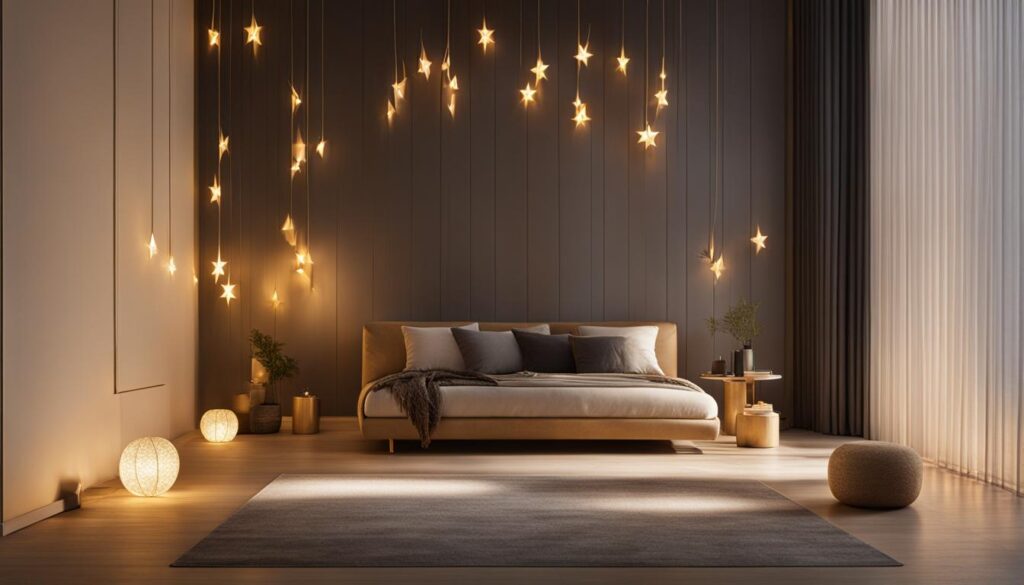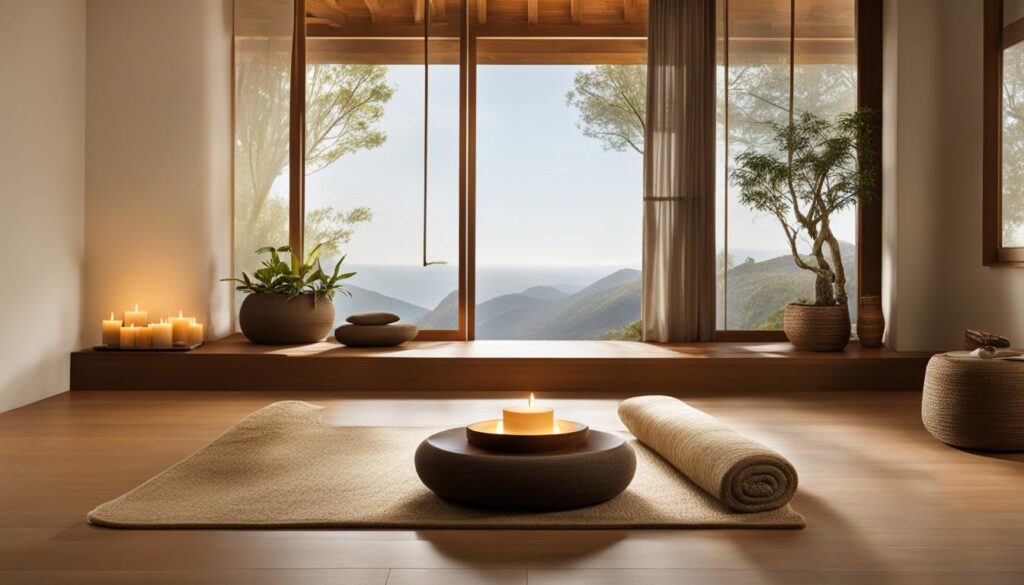
The Importance Of Lighting In Your Meditation Area cannot be overstated when creating a space that supports deep inner work. The right lighting sets the tone for your practice, helping you transition from the busy outside world into a state of calm awareness.
Poor lighting can create distractions, strain your eyes, or make you feel too alert when you need to wind down. Good lighting, on the other hand, signals to your nervous system that it’s time to slow down and turn inward.
TL;DR
- Dim, warm lighting between 1800K-2700K color temperature promotes relaxation and reduces cortisol levels by up to 23%.
- Salt lamps produce negative ions that can improve air quality and create a naturally soothing 2000K warm glow.
- Candles provide the ideal 1900K lighting and add a ritualistic element that helps signal the start of meditation practice.
- Avoid blue light from screens 2 hours before meditation as it suppresses melatonin production by 50% and keeps your mind alert.
The Importance Of Lighting In Your Meditation Area
Your meditation space lighting directly affects your ability to relax and focus inward. Bright overhead lights keep your nervous system in an active state, making it harder to settle into the calm awareness that meditation requires.
Soft, warm lighting tells your body it’s time to shift gears. This biological response happens because dim lighting triggers the release of melatonin, even during daytime hours, which naturally calms your mind and body.
How Light Affects Your Meditation Practice
Different types of lighting create different mental and physical states. Understanding this connection helps you choose lighting that supports rather than hinders your practice.
When you create your meditation space at home, consider how light influences your nervous system throughout the day.
The Science Behind Lighting and Relaxation
Your circadian rhythm responds to light cues, with bright light signaling alertness and dim light promoting rest. Research shows that exposure to warm, dim lighting reduces cortisol levels and increases the production of calming neurotransmitters like GABA.
Cool, bright lighting has the opposite effect – it increases alertness hormones and makes your mind more active. This is why meditating under fluorescent office lights feels so different from sitting by candlelight.
Best Lighting Options for Meditation
The most effective meditation lighting creates a gentle, warm atmosphere without harsh shadows or bright spots that draw your attention. Here are the top options that meditation practitioners find most helpful:
- Candles – provide the warmest light at 1900K and add a ritualistic element to your practice.
- Salt lamps – offer steady 2000K lighting plus negative ions that may improve air quality.
- Dimmable LED bulbs – let you adjust brightness and choose warm color temperatures between 2000K-2700K.
- String lights – create soft, diffused lighting that’s easy on the eyes.
- Natural daylight – works well for morning meditation when filtered through curtains or blinds.
Candle Meditation Setup
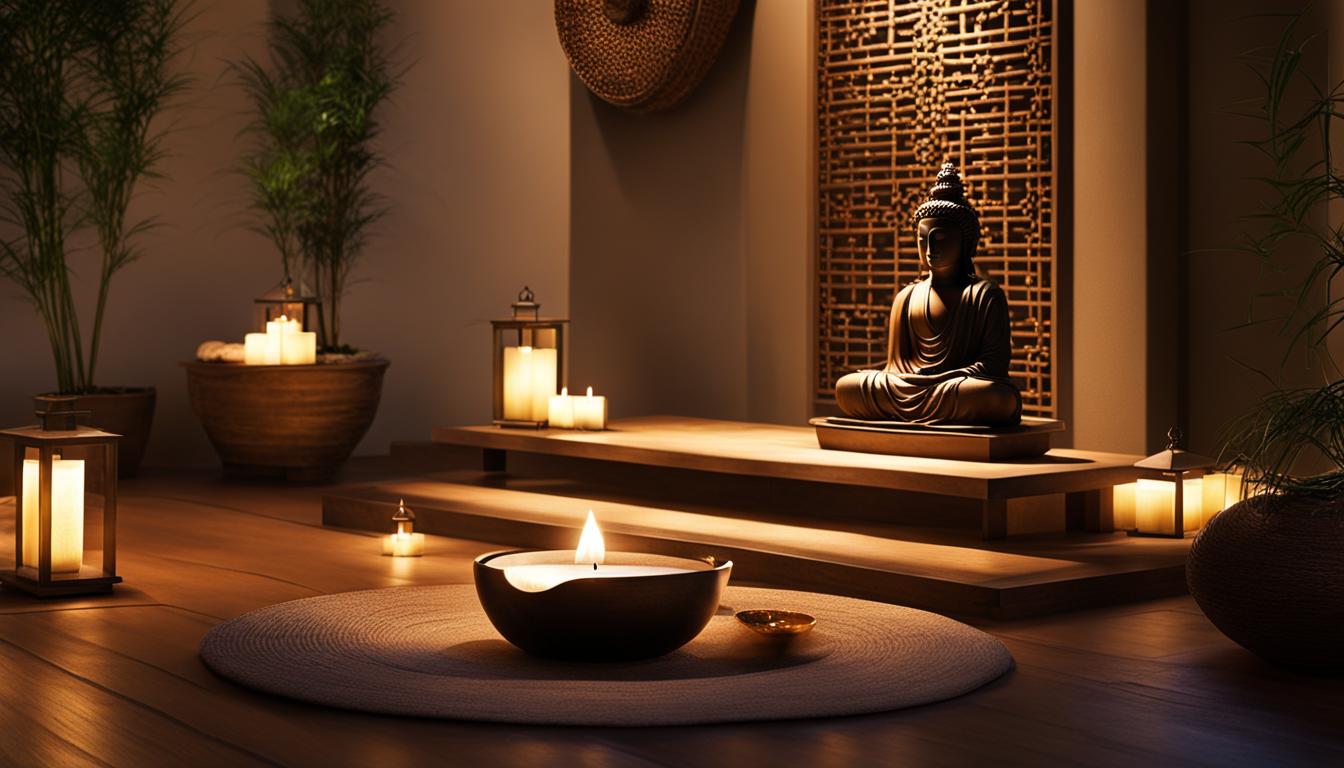
Candles remain the gold standard for meditation lighting. They provide consistent warm light without electrical hum or flicker that LED lights sometimes produce.
Place candles at eye level or slightly below when seated to avoid looking up into bright light. Use unscented candles to avoid distracting your focus, and always follow fire safety guidelines in your meditation area.
Modern LED Solutions
Smart LED bulbs give you complete control over brightness and color temperature. Start with 100% warm white (2700K) then dim to about 10-20% brightness for evening meditation sessions.
Some practitioners prefer colored LED lights – soft amber, red, or even blue can work depending on your meditation goals. Experiment to find what helps you settle most easily into practice.
Quick Lighting Check
Sit in your meditation space and look around without moving your head. If any light source draws your attention or creates glare, adjust its position or brightness before starting your session.
Avoiding Problematic Lighting
Certain types of lighting actively work against meditation by keeping your nervous system in an alert state. Being aware of these helps you create a more supportive environment.
When you’re choosing essentials for your meditation space, lighting deserves as much attention as your cushion or altar setup.
Lights That Disrupt Practice
- Overhead fluorescent bulbs – create harsh, cool light that keeps you mentally active.
- Blue-rich LED screens – suppress melatonin and maintain alertness for hours after exposure.
- Flickering lights – cause subtle eye strain and mental distraction even when you don’t consciously notice.
- Direct spotlights – create bright spots that draw attention and harsh shadows that feel unsettling.
- Colored party lights – stimulate rather than calm the nervous system.
Managing Natural Light
Natural sunlight can be wonderful for morning meditation when properly managed. Direct sun creates glare and heat that becomes distracting, so use sheer curtains or blinds to soften the light.
For evening practice, natural light often isn’t available, making artificial lighting choices more important. The key is matching your lighting to the energy level you want to cultivate in your practice.
Seasonal Lighting Adjustments
Your lighting needs change with the seasons as natural daylight patterns shift. Summer evening meditation might need less artificial light, while winter sessions often require more warmth and brightness to counteract seasonal mood changes.
Consider having multiple lighting options available so you can adjust based on the time of year, weather, and your energy level on any given day.
Creating Lighting Rituals
The act of adjusting lighting can become part of your meditation ritual. Dimming lights or lighting candles signals to your mind that it’s time to transition from daily activities to inner focus.
This ritualistic aspect helps create consistency in your practice, especially when you’re building a regular meditation routine. The physical act of changing the lighting becomes a bridge between your outer and inner worlds.
Articles You May Like
Frequently Asked Questions
What’s the best light color temperature for meditation?
Warm light between 1800K-2700K works best for most meditation practices. This range promotes relaxation and helps your nervous system shift into a calmer state.
Should I meditate with lights on or off?
Complete darkness can make some people feel sleepy or anxious, while bright light keeps you too alert. Dim, warm lighting provides the ideal middle ground for most practitioners.
Can I use my phone’s flashlight for meditation lighting?
Phone flashlights typically produce cool, blue-rich light that’s too stimulating for meditation. Use dedicated warm lighting sources like candles or warm LED bulbs instead.
How bright should meditation lighting be?
Aim for lighting that’s bright enough to see safely but dim enough that it doesn’t draw your attention. About 10-20% of normal room lighting usually works well.
Is it safe to meditate with candles?
Yes, with proper precautions – use stable holders, keep candles away from flammable materials, never leave them unattended, and have a way to extinguish them quickly. Consider LED candles for a safer alternative.
Final Thoughts
The Importance Of Lighting In Your Meditation Area becomes clear once you experience how much easier it is to settle into practice with the right lighting conditions. Good lighting supports your nervous system’s natural ability to shift from active awareness to calm inner focus.
Start by experimenting with dimmer switches on existing lights or adding a few candles to your peaceful meditation corner. Small changes in lighting can make a significant difference in the quality of your meditation sessions.